← Trenton 2030

Health and Human Services.

We will reduce unsheltered homelessness through housing and retention support, expand accessible clinical services, help returning residents enter lasting employment and provide dependable senior programming in every ward. Each expansion will build on existing local providers and facilities, with contracts specifying who delivers the service and how results are measured.

  1. 1

    Reduce unsheltered homelessness by 25% with support tied to keeping housing

    How we will do it
    HHS will work through the Trenton/Mercer Continuum of Care to identify housing placements and support needs. Where funding rules permit, city-controlled provider contracts will combine core service funding with payments for verified housing and retention at three and six months. We will track returns to homelessness and prioritize residents with the greatest needs. We will also explore acquiring and rehabilitating the YWCA property for housing and supportive services for families experiencing homelessness, using HOME-ARP funding. HED and HHS will assess the building, establish rehabilitation and operating costs, and identify a provider to deliver housing and ongoing family support.
    Why it works
    Housing stability requires both a place to live and assistance that responds when the tenancy is at risk. Core funding will sustain outreach and high-need services, while retention payments reward follow-through rather than placement alone. Denver’s evaluated supportive-housing program retained 77% of housed participants still living after three years, demonstrating the potential of housing combined with sustained support.
    Already done
    The local Continuum of Care already coordinates entry and HUD funding applications. We will build on that system, using a consistent unsheltered baseline and annual count alongside retention data.
  2. 2

    Expand North Broad clinical services and neighborhood access through two mobile health units

    How we will do it
    We will expand primary care, preventive care, vaccinations, physical examinations and diagnostic screenings at 218 North Broad Street and through the city’s two existing mobile health units. Clinical operating agreements will specify clinician hours, appointment capacity, uninsured-care funding and referral responsibilities. Mobile sessions will be scheduled with neighborhood hosts that help residents arrange appointments and obtain follow-up care.
    Why it works
    A mobile unit is most productive when patients are scheduled and follow-up remains connected to a fixed clinical base. Shared staffing and records will allow testing, vaccination and primary-care encounters to lead to treatment rather than isolated screenings. Contracting for operating hours and appointment capacity will make the service accountable for access as well as equipment.
    Already done
    The city has two mobile health units and has issued a procurement for comprehensive primary healthcare services, providing a foundation for expanded clinical operations.
  3. 3

    Place 100 returning residents in lasting jobs each year

    How we will do it
    Our Office of Returning Citizens will recruit employers willing to consider applicants with criminal records and arrange interviews around actual vacancies. Before referral, staff will address identification requirements, confirm the commute and connect eligible participants to job-specific training through workforce partners. We will track six-month retention and count these placements within the broader resident-employment goal.
    Why it works
    A training certificate has limited value if employers will not consider the applicant or the person cannot complete onboarding. Starting with willing employers and resolving documentation before the interview will reduce failed referrals, while retention follow-up will support the income and routine needed for a stable return to the community.
    Already done
    Our Office of Returning Citizens already provides workplace readiness, forklift training and expungement assistance, including a published October-December 2026 program.
  4. 4

    Open the South Ward Senior Center and complete renovations at all four senior centers

    How we will do it
    Our Office on Aging will open the new South Ward Senior Center, finish the work at Reading and complete renovations at the Sam Naples and Jenny Stubblefield centers. We will take inventory of the programming at each center and shape the renovations so every building can accommodate expanding senior service programming, with published hours and named staffing at each location.
    Why it works
    Seniors should not have to cross the city to reach a decent program. A renovated center in each part of Trenton, with programming matched to what each neighborhood actually uses, will put dependable services within reach of every ward and give growing participation room to grow into.
    Already done
    We reopened the approximately 11,000-square-foot Reading Senior Center in September 2026 following a $1.3 million city-county rehabilitation partnership.
  5. 5

    Four mental health counselors, one serving each ward

    How we will do it
    HHS will contract with a licensed mental health provider for four full-time counselors, each assigned to a ward and offering scheduled appointments at accessible neighborhood locations. Counselors will provide assessment, short-term counseling and connections to ongoing treatment, coordinating with ARRIVE Together when residents need follow-up after a crisis. We will propose a recurring city allocation, seek Mercer County mental health funding and require the provider to bill NJ FamilyCare and other insurance for eligible services. Public funding will support uninsured residents and work that insurance does not cover.
    Why it works
    A familiar counselor with dependable neighborhood hours will make it easier for residents to seek help and stay connected to care. Contracting with an established provider will supply clinical supervision, referral networks and billing capacity. We will track appointment availability, completed visits and successful connections to continuing treatment.
    Already done
    Trenton participates in ARRIVE Together through the Mercer County partnership with Capital Health. Mercer County also funds community mental health providers serving residents who cannot afford care, providing an existing funding mechanism we can pursue for expanded neighborhood services.
  6. 6

    Provide dental care to 250 uninsured residents annually

    How we will do it
    By 2028, HHS will establish a contracted dental program serving 250 uninsured children, adults and seniors annually. We will arrange approximately five new patient appointments each week, alongside follow-up treatment. Services will include preventive and essential dental care, with referrals for specialized treatment.
    Why it works
    Dedicated appointments will help residents obtain care they otherwise struggle to afford. Connecting examinations to treatment will address dental problems before they become more painful and disruptive.
  7. 7

    Make 40 homes lead-safe by 2030

    How we will do it
    We will use the HUD-funded Lead Hazard Reduction Program to make 40 eligible Trenton homes lead-safe by 2030, providing up to $25,000 per home at no cost to participating households. Beginning in January 2027, the program will provide inspections, risk assessments and certified repairs addressing lead-painted windows, doors, trim and other hazards. Every completed home will undergo clearance testing. We will help homeowners and renters apply and connect families to childhood lead screening and follow-up services. HHS will also expand childhood lead testing, including at least one neighborhood screening opportunity in every ward each quarter, alongside regular clinical services.
    Why it works
    Finding and repairing hazards will address exposure at its source. Grant-funded work will make improvements accessible to families who cannot afford them, while clearance testing will verify that the work meets lead-safety standards. This work will complement the replacement of lead water-service lines.
    Already done
    The city has secured HUD funding, assembled its program team and brought a certified contractor on board. The program website provides eligibility information and assistance ahead of applications opening in January 2027.
  8. 8

    Provide monthly nutritious-food distribution in every ward

    How we will do it
    By 2028, HHS will coordinate at least one nutritious-food distribution each month in every ward, working with food banks, nonprofit organizations and community providers. We will expand existing partnerships and fill gaps in neighborhood access, serving families, seniors and other residents experiencing food insecurity.
    Why it works
    A dependable neighborhood schedule will make assistance easier to find and use. Coordinating providers, distribution locations and food supplies will help reach residents who are missing out on existing services.
  9. 9

    Expand affordable animal care and modernize shelter services

    How we will do it
    By 2028, we will support 200 low-cost spay and neuter procedures and 400 free microchips annually, drawing on available Lady Margaret Trust Fund resources and veterinary partnerships. We will add two Animal Control Officers and coordinate training with the Prosecutor’s Office in animal welfare investigations, enforcement and court responsibilities. By the end of 2027, we will launch a dedicated shelter website with adoptable animals, lost-and-found reporting and service information. Electronic animal records and digital case management will support daily operations and follow-up.
    Why it works
    Affordable preventive care and microchipping will help residents care for their animals and recover lost pets. Additional officers, professional training and accessible records will strengthen emergency response, investigations and communication with residents.
    Already done
    The City of Trenton already runs spay and neutering and microchipping events on an ongoing basis, so the program starts from services residents can already use.
  10. 10

    Keep Trenton a Healthy Town to Watch and bring wellness programming to every ward

    How we will do it
    HHS will maintain a standing citywide health and wellness plan, reviewed each year against the indicators the New Jersey Health Care Quality Institute uses to recognize communities, with the results published on the Open Trenton dashboard. The plan will coordinate the North Broad clinic, the two mobile health units, the Olden Avenue neighborhood clinic, senior centers, parks programming and school partnerships into one ward-by-ward calendar of health screenings, physical activity, nutrition and dental services, so every resident can reach a wellness activity close to home every month. Each partner will be named in a written agreement covering the service it delivers, the hours it offers and the number of residents it expects to reach.
    Why it works
    Recognition follows documented, sustained progress rather than single events, so a standing plan with a public annual report keeps the work visible and holds each partner to the hours it promised. Coordinating clinics, vans and community buildings that already exist into one calendar adds residents served without building new facilities, and a published count of residents reached in each ward shows which programs to expand and which to replace.
    Already done
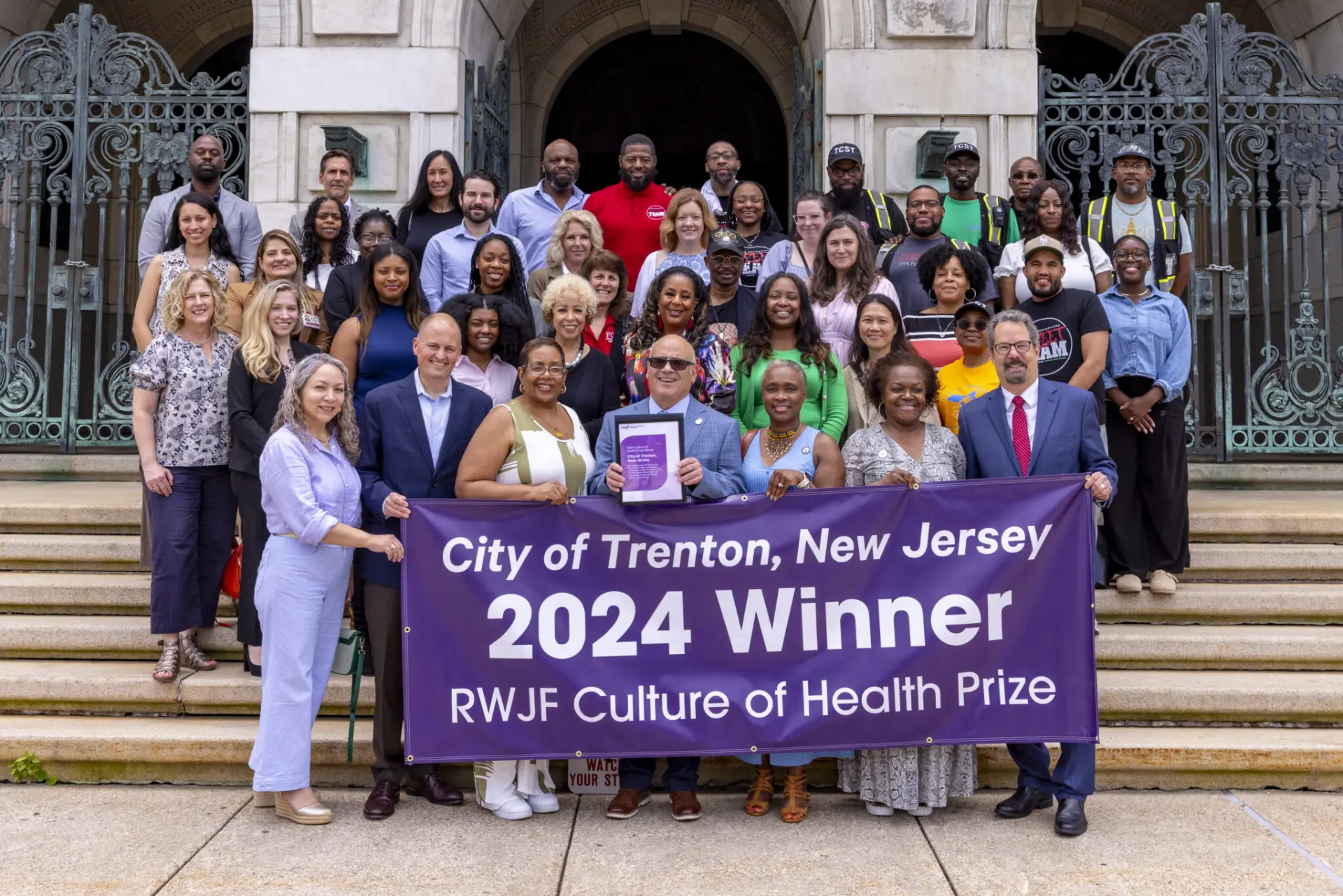
    Trenton was recognized as a 2025 New Jersey Healthy Town to Watch by the New Jersey Health Care Quality Institute for its commitment to improving the health and wellness of the community. The city also holds the Robert Wood Johnson Foundation Culture of Health Prize and already operates two mobile health units and a neighborhood clinic on Olden Avenue.

Help deliver the plan.

The runoff is December 8. Knock on doors, make calls, request a lawn sign, or host a fundraiser. Every shift counts.

Join the campaign