
← Trenton 2030

Trenton Police.

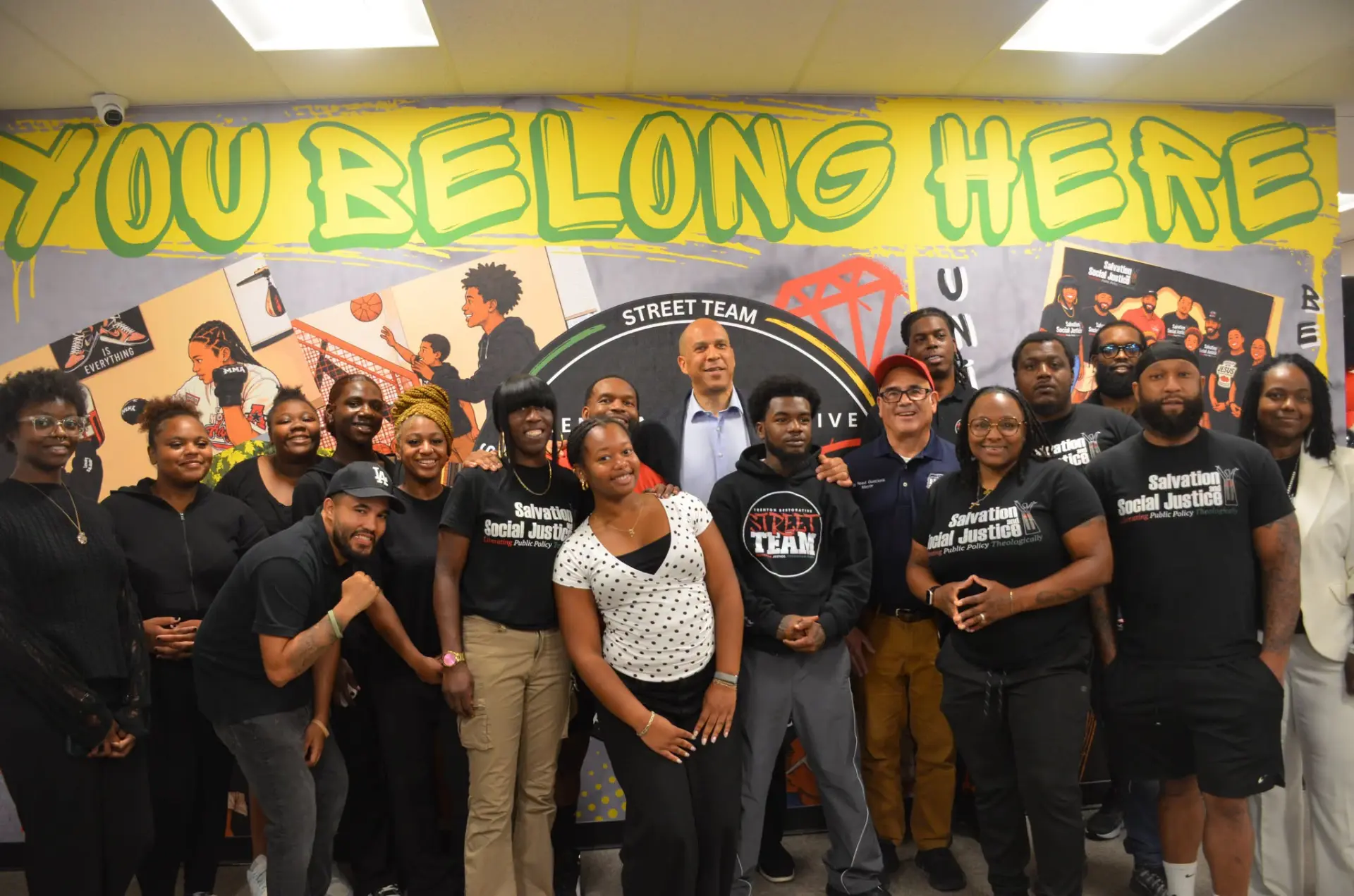
We will build on existing enforcement and community intervention by doubling municipal Street Teams funding, supporting additional outreach staff and recruiting officers for sustained coverage. We will combine that capacity with stronger investigative follow-through, expanded clinical crisis response and monthly public results.

  1. 1

    Cut annual violent crime by 50%

    How we will do it
    We will lead with Street Teams, doubling municipal Street Teams funding, then continue hiring police officers, with both focused on the hot spots where serious violence is concentrated. Street Teams funding will double by 2028 against the 2026 baseline, supporting additional outreach staff and broader conflict-intervention coverage, while new officers sustain foot patrols on the blocks that drive violence. Progress will use consistent FBI categories and a published historical baseline.
    Why it works
    Visible patrols and trusted outreach workers perform complementary functions: patrols can deter violence at recurring locations, while mediators can intervene in disputes before they become shootings. Additional staffing will extend coverage without merely spreading existing personnel thinner. Research supports concentrated hot-spot policing; Philadelphia’s 2009 randomized experiment found 23% less violent crime in targeted foot-patrol areas relative to comparison locations.
    Already done
    Our local Street Teams and focused enforcement are already operating. The next investment will expand their reach and consistency.
  2. 2

    Keep homicides below ten per year

    How we will do it
    Our Police Director will strengthen shooting reviews with the Mercer County Prosecutor’s Office, using existing analysis to prioritize immediate threats and investigative resources. Expanded Street Team staffing will support timely mediation and sustained follow-up, with clear boundaries between community outreach and criminal investigations.
    Why it works
    A dispute can continue after the immediate incident has ended, while people who distrust police may still speak with an established outreach worker. Additional capacity will allow mediators to revisit unresolved conflicts as investigators establish responsibility for violence. The combination addresses both immediate danger and the risk of retaliation, protecting families and the surrounding neighborhood.
    Already done
    Isles reports that its Street Team has provided safe-passage work around four educational sites since 2022, establishing relationships on which expanded intervention can build.
  3. 3

    Reduce shootings and nonfatal shooting victims by 30%

    How we will do it
    We will strengthen investigative capacity for nonfatal shootings, with a lead investigator, a supervisory review within 72 hours and a 30-day review of outstanding evidence. We will coordinate video recovery, ballistic evidence and witness follow-up with county partners, while measuring incidents and nonfatal victims separately against 2026.
    Why it works
    Video can be overwritten and witnesses become harder to locate, so sufficient early investigative capacity matters. Scheduled reviews will help preserve leads and prevent unresolved cases from becoming inactive. Sustained attention to nonfatal shootings will strengthen accountability before further violence occurs.
    Already done
    Our July 2025 CitiStat report recorded a 90% homicide clearance rate to that point in the year, demonstrating the investigative capacity of the county task-force partnership.
  4. 4

    Expand ARRIVE Together mental health response to all four wards

    How we will do it
    We will work with Capital Health’s Crisis Unit and the Attorney General’s Office to expand clinician-supported response across all four wards, scheduling additional coverage around call demand. Every dispatcher will receive crisis-screening training, with protocols for requesting clinical assistance and arranging follow-up.
    Why it works
    The value of the clinical partnership depends on availability when calls occur and continuity after the encounter. Additional demand-aligned hours will improve access to specialized assessment, while follow-up connects the immediate response to continuing care and helps address repeated crises.
    Already done
    We joined ARRIVE Together in 2024, pairing officers with Capital Health professionals. The initial model provided teams at least two days weekly, giving us an established partnership to expand.
  5. 5

    Publish monthly police response times and crime data on Open Trenton

    How we will do it
    Our Police Director will designate a data lead to publish response times by call priority, violent-crime trends and clearance figures. Command reviews will distinguish dispatch delay from travel time and current-year cases from older investigations resolved during the reporting period.
    Why it works
    Those distinctions identify whether the constraint is unit availability, deployment or investigative followthrough. Publishing them consistently will make staffing decisions more precise and allow residents to judge whether additional resources improve service.
    Already done
    We already report police performance through CitiStat. Open Trenton will make those results consistent, monthly and accessible.
  6. 6

    Require monthly command reviews of police force incidents and complaints

    How we will do it
    Our Police Director will strengthen monthly command reviews of force incidents, complaints and recurring supervisory concerns, drawing on reports and available body-camera footage. Findings will lead to documented training, supervision or disciplinary action as appropriate, with aggregate results reported publicly.
    Why it works
    Reviewing patterns across incidents can reveal tactical or supervisory problems that individual case review misses. Earlier correction will reinforce professional standards, while fair treatment will support the cooperation investigators need from victims, witnesses and residents.
    Already done
    Our Police Department earned NJSACOP accreditation in June 2026 following review against more than 100 professional standards. We will carry that progress into continuing supervision.

Help deliver the plan.

The runoff is December 8. Knock on doors, make calls, request a lawn sign, or host a fundraiser. Every shift counts.

Join the campaign