← Trenton 2030

Trenton Water Works.

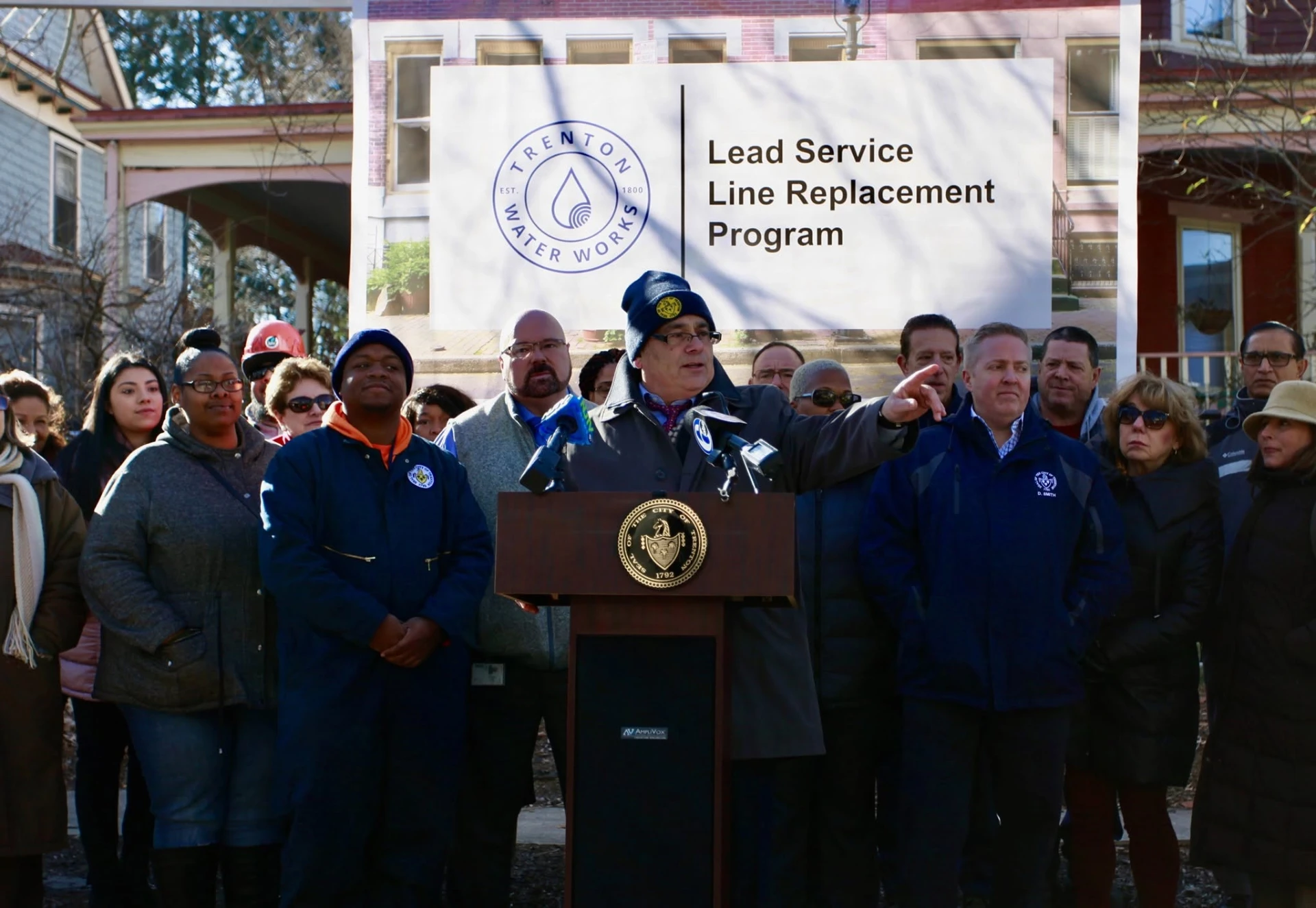
We will remove lead, modernize infrastructure, protect the finished-water supply, strengthen TWW’s workforce and customer service, and keep the utility in Trenton hands. We will accelerate lead-service-line replacement to finish by 2030, one year ahead of the program’s current 2031 objective. We will advance the $763 million capital program, build a new central pumping station and decentralized storage tanks to replace the Pennington Avenue Reservoir, design and build a new water-quality laboratory, implement recommended raw-water intake improvements and complete smart-meter activation. These investments will support housing growth throughout TWW’s service area and protect water quality for generations. Annual public updates will track delivery of these commitments and progress through the broader 2024–2033 capital program.

  1. 1

    Replace every remaining lead and eligible galvanized water service line by 2030

    How we will do it
    TWW will accelerate its replacement schedule to finish by 2030, reconciling its service-line inventory, investigating unknown materials and publishing annual construction targets tied to that deadline. We will identify the additional construction capacity and financing needed to bring completion forward, procure neighborhood-based construction packages, coordinate property access before crews arrive and align restoration with paving. Eligible replacements will remain free to property owners, supported by the program’s state and federal financing.
    Why it works
    An unidentified service line cannot be scheduled reliably, while a crew without property access loses productive time. Resolving materials and access before construction will allow more continuous work, while neighborhood packaging will reduce repeated mobilization. Annual targets tied to crew capacity and financing will make the accelerated schedule measurable. Full replacement will remove lead-bearing service infrastructure rather than leave part of the exposure source in place.
    Already done
    Since 2019, we have invested approximately $70 million and replaced more than 11,000 lead service lines at no cost to participating owners. We will build on that progress to bring the program’s existing 2031 completion objective forward to 2030.
  2. 2

    Execute the $763 million water plan, with annual public updates

    How we will do it
    TWW will advance the $763 million Capital Improvement Plan project by project through its published 2024–2033 schedule, coordinating storage, pumping, treatment-plant upgrades, mains and service lines with the operating needs of the network. Every year we will publish where each project stands: engineering, permits, financing, construction and completion. Updates will identify expenditures, upcoming milestones and delays requiring action, including progress toward accelerated service-line replacement by 2030.
    Why it works
    Storage, pumping and treatment form one system, so coordinating the work will allow new facilities to enter service while maintaining supply. Financing through the New Jersey Infrastructure Bank will spread eligible costs over time, with utility revenues supporting repayment. Annual updates will let residents see what has been completed, what remains and how their utility payments support improvements.
    Already done
    TWW has published its $763 million Capital Improvement Plan for fiscal years 2024–2033, including storage, pumping, plant, service-line and distribution improvements.
  3. 3

    Build a new central pumping station and decentralized storage tanks to replace the Pennington Avenue Reservoir

    How we will do it
    TWW will build a new central pumping station and a network of enclosed storage tanks across its service area, replacing the open Pennington Avenue Reservoir. We will coordinate design, permitting, construction and connections so the new facilities operate together. The reservoir will be closed and decommissioned once replacement facilities are commissioned and the system can maintain the required supply and pressure. We will pursue eligible New Jersey Infrastructure Bank financing, coordinating borrowing with construction milestones and providing for repayment and operations through utility revenues.
    Why it works
    Storage and pumping must function as one system. Enclosed tanks will protect treated water from environmental exposure, while the new pumping station will support its distribution throughout the service area. Coordinated planning will account for existing customers and projected demand, supporting housing growth while maintaining dependable service.
    Already done
    TWW’s published capital program includes the new central pumping station and decentralized storage tanks as part of the approximately $400 million reservoir-replacement project.
  4. 4

    Design and build a new laboratory to strengthen water-quality testing

    How we will do it
    TWW will design and build a new water-quality laboratory, beginning with a defined testing program, facility requirements and equipment plan. We will identify which analyses will be performed in-house and which will continue through specialized certified laboratories. The project will include trained staff, applicable certifications, documented sample handling and quality-control procedures. We will assess available PFAS settlement proceeds for eligible laboratory improvements, pursue eligible financing for remaining capital costs and budget for ongoing staffing and supplies. Existing testing will continue throughout the transition.
    Why it works
    A modern laboratory will give water-quality staff the facilities and equipment needed to support treatment decisions and investigate changes in water quality. The investment will combine the building, instruments, staffing and testing procedures, so expanded capacity produces reliable results that operators can act on.
    Already done
    TWW has announced approximately $11.3 million in PFAS settlement proceeds, before legal fees, with planned uses including laboratory modernization, monitoring equipment and treatment improvements. TWW already operates a state-certified laboratory.
  5. 5

    Implement recommended improvements to the filtration plant’s raw-water intake

    How we will do it
    TWW will implement the engineering recommendations selected through its independent raw-water intake assessment, coordinating required approvals with NJDEP. We will advance the selected improvements through design, permitting and construction, addressing identified weaknesses in water flow, intake screens, cleaning systems and cold-weather performance. Updated operating and maintenance procedures will accompany the physical work, with backup arrangements maintained during construction. We will establish costs from the approved recommendations, incorporate the work into TWW’s capital schedule and pursue eligible New Jersey Infrastructure Bank financing.
    Why it works
    The filtration plant depends on a reliable flow of water from the Delaware River. Ice, accumulated sediment and aquatic vegetation can restrict that flow before treatment begins. Addressing the intake’s design and operating limitations will strengthen year-round reliability and support the transition from the reservoir to the new storage system.
    Already done
    TWW has issued an engineering procurement covering intake evaluation, design improvements, permitting and construction support. The city has also awarded a contract to upgrade the intake’s Hydroburst screen-cleaning system.
  6. 6

    Keep Trenton Water Works in Trenton hands

    How we will do it
    We will keep TWW a public utility owned by the City of Trenton, rejecting privatization and investing in the workforce and infrastructure needed to operate it responsibly. We will prioritize safe service, maintenance and capital obligations while continuing lawful financial support for city services.
    Why it works
    Public ownership will preserve local accountability and public control over a critical asset. Strengthening the utility’s operations and finances will protect customers throughout its service area while retaining the benefits of ownership for Trenton residents.
  7. 7

    Add operational engineers and strengthen TWW’s workforce

    How we will do it
    TWW will recruit and hire additional operational engineers to strengthen plant, distribution and capital-project support. We will review compensation, support relevant professional licensing and build recruitment partnerships with regional colleges. Engineering recruitment will be coordinated with staffing needs for licensed operators, laboratory personnel and maintenance teams, with training and succession planning included in the operating budget.
    Why it works
    A stronger in-house workforce will provide technical oversight, continuity and faster operational decisions. Engineers will support system improvements and contractor oversight, while qualified operators, laboratory staff and maintenance teams will keep facilities running and testing requirements on schedule.
  8. 8

    Activate approximately 63,000 verified smart water meters

    How we will do it
    TWW will complete installation and activation by service area, verifying that each meter transmits reliably, is assigned to the correct account and produces a valid billing reading. Monthly reporting will distinguish installed meters from fully commissioned accounts and identify failed transmissions requiring follow-up.
    Why it works
    A meter produces value when its reading reaches the correct bill, so commissioning will cover the entire chain from installation to account matching. Reliable readings will reduce estimated charges and make unusual consumption easier to investigate, while remote collection will reduce routine meter-reading work.
    Already done
    The project covers 63,034 meters and is supported by $20 million in New Jersey Water Bank financing.
  9. 9

    Strengthen customer service and make billing problems easier to resolve

    How we will do it
    TWW will give customers a reference number and a clear next step for each billing inquiry or service complaint, whether submitted by phone, online or in person. Customer-service staff will be able to route cases to billing, metering or field operations and track them through resolution. We will provide plain-language explanations of adjustments, accessible language assistance and updates when an investigation requires additional time. Staffing, training and case-management improvements will be included in TWW’s operating budget.
    Why it works
    Customers will have a way to follow their inquiry without repeatedly explaining the same problem to different offices. Connecting customer service with meter readings, billing records and field investigations will help staff resolve the underlying issue. We will track response times, unresolved cases and repeat complaints to identify recurring problems and improve service.

Help deliver the plan.

The runoff is December 8. Knock on doors, make calls, request a lawn sign, or host a fundraiser. Every shift counts.

Join the campaign